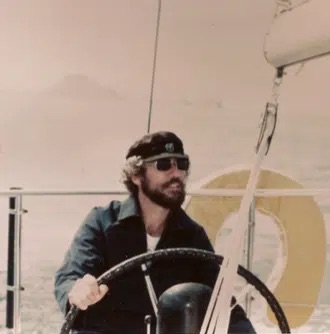
Just as the cardinal and lesser winds may shift about, play tricks, and cease to blow and ultimately fail us….so may the iron wind that we rely upon when needed. Most sailors know that iron wind refers to the engine of a sailboat.
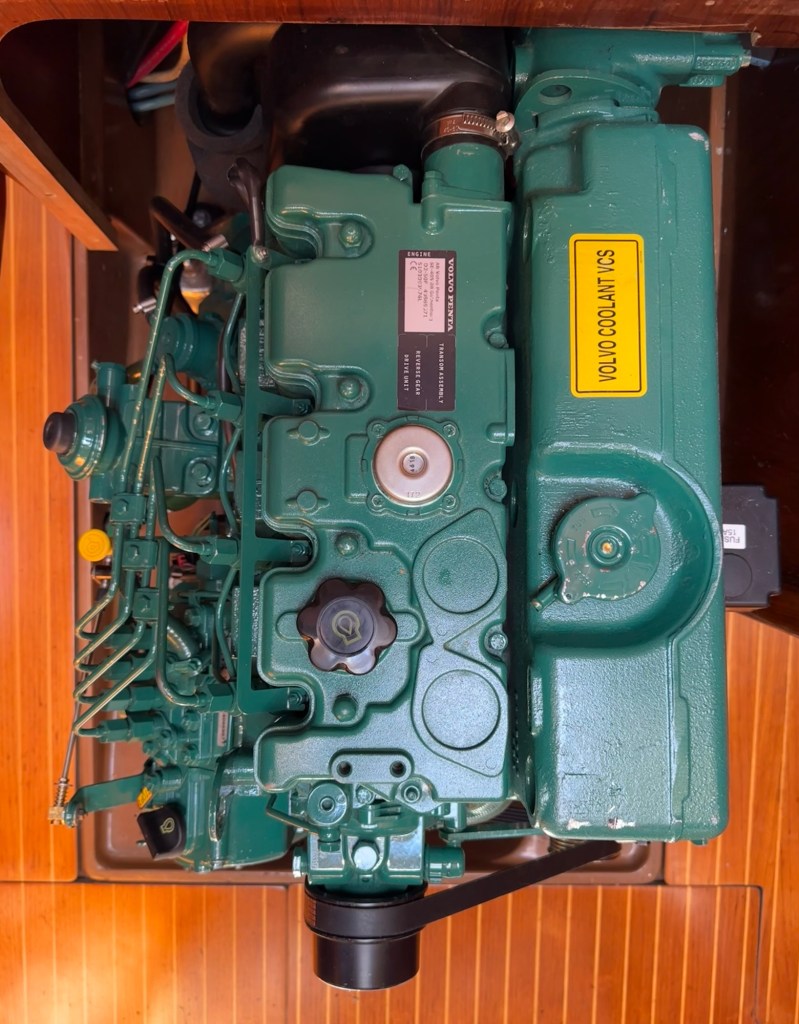
I replace the nearly 50-year-old and previously rebuilt Perkins engine in S/V Ruby with a brand new Volvo Penta D2 50 and took delivery just over two months ago. I was both excited and confident to know that I had the very best and most reliable of all reserve power units available at the turn of a switch and the touch of a few buttons.
The only issue upon taking delivery was rev hunting on startup. The engine ran fine as throttle was applied. We decided to resolve this matter at a later date as the vessel was scheduled for completion of the work on the rig.
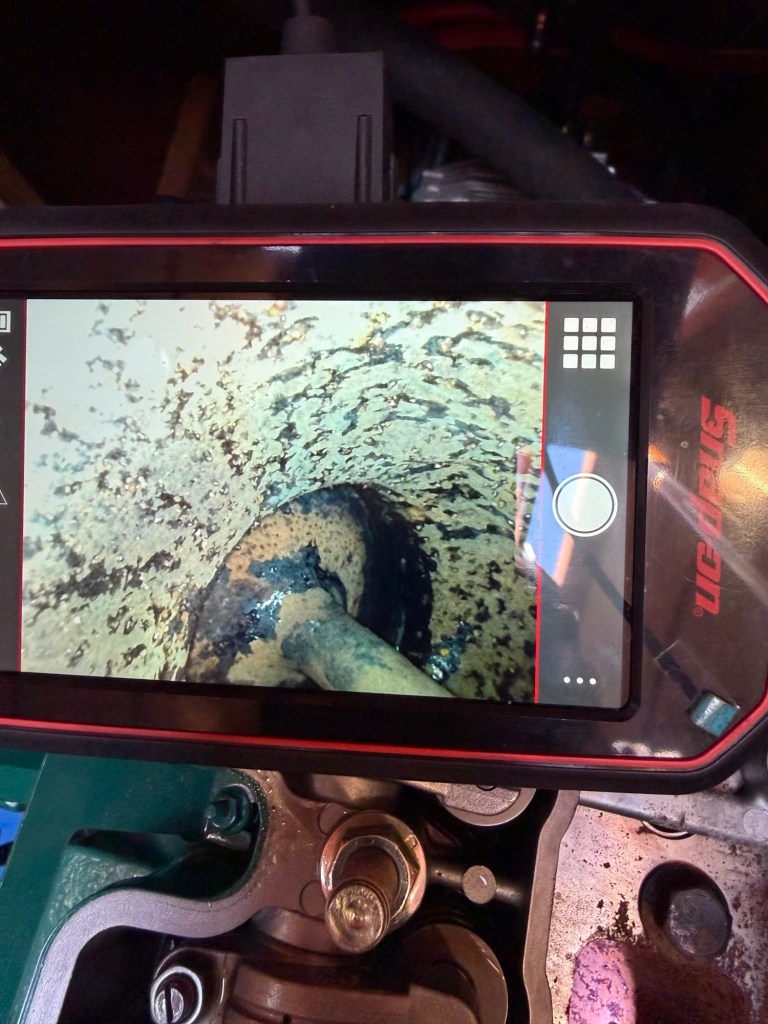
The vessel was motored for a total of 2.5 hours from one harbor to next for work then to its home slip. When the engine technician came to the slip to remedy the rev hunting issue the engine would not start. Inspection revealed salt water had infiltrated the engine. The interior viewed through the oil fill cap looked as if someone had poured a vanilla milkshake inside the compartment. The oil level was high on the dipstick and looked normal except that at the very tip of the dipstick it looked a little cloudy and was tan brown in color. I learned that salt water in the oil will settle and the oil level will appear over filled. That’s a good clue. Always look at the tip of the dipstick if you see this unexpected anomaly of the engine oil appearing as if it has been overfilled.
The vessel was towed to the engine shop. TowBoat US did a great job though I disputed our time of travel. I preferred to plan to arrive at the San Rafael creek at high tide or just after at slack. At any rate, I remained on board to steer as required. We went through to the shop without a hitch arriving 1.5 hrs sooner than I had hoped. I’m sure the keel was close to the sea floor. The towing team so no worries as the mud was like a “chocolate milkshake” and not a problem. There were no snags or bumps. But stilk. What’s with all these milkshakes?! My advice is to always have towing insurance as you never know when it will be required.
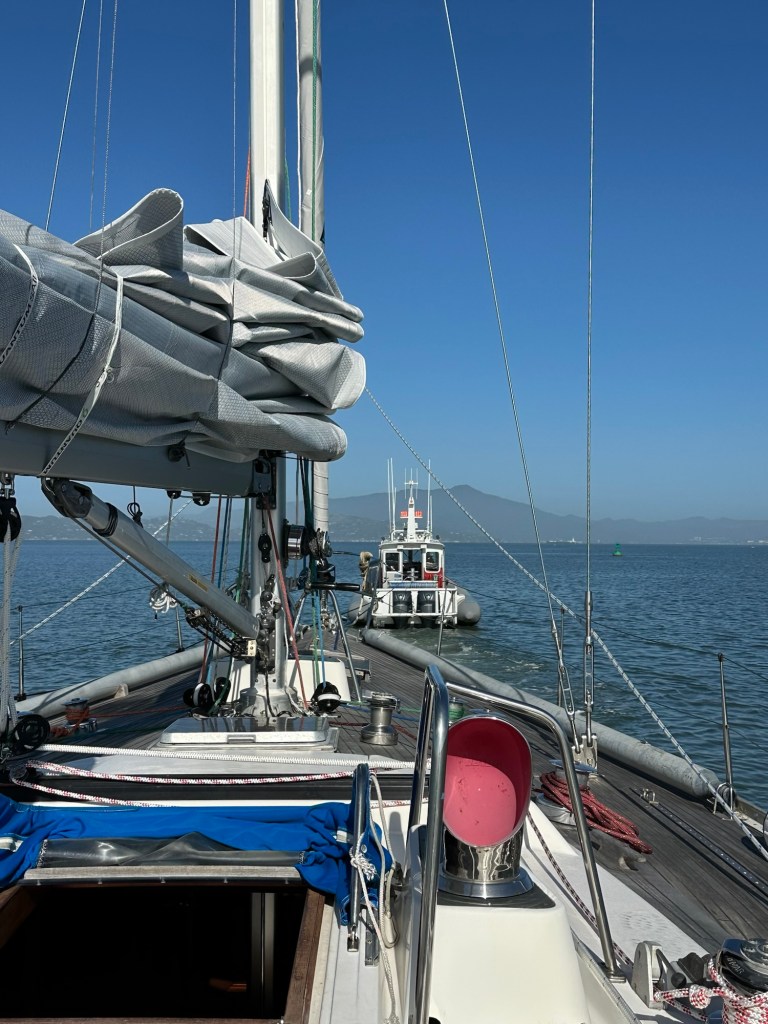
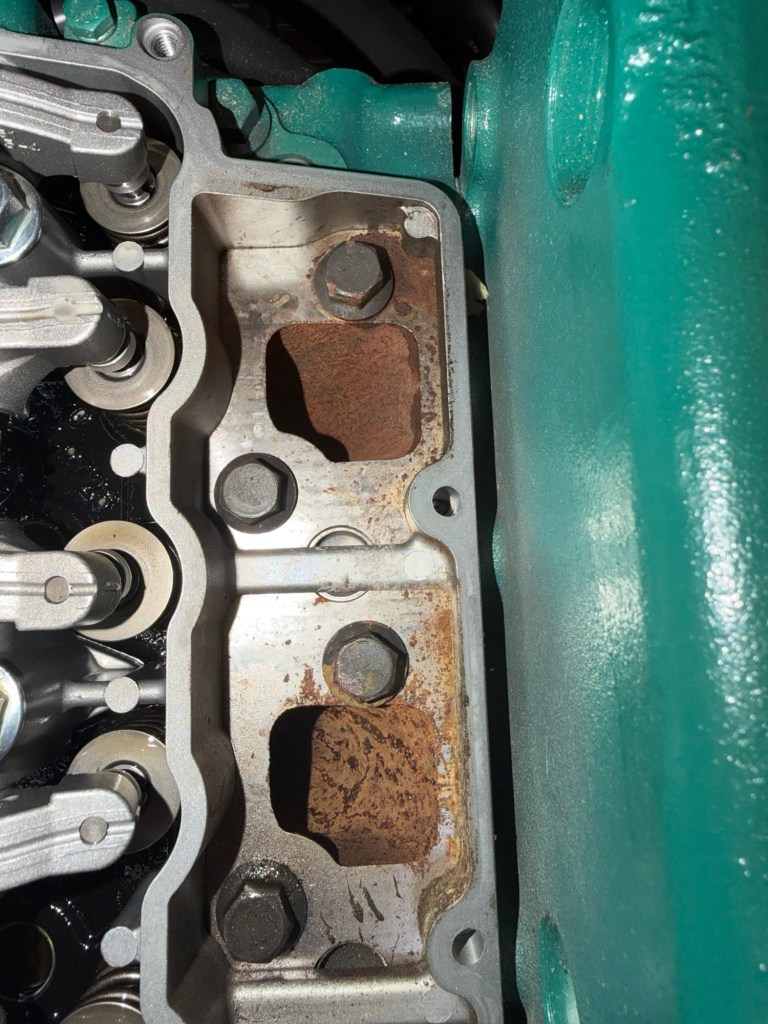
Helmut’s Marine inspected the exhaust system and then the rest of the engine. While there was some debate as to how water may have found its way into the engine, in the end, they found corrosion on the raw water side that is supposed to be dry. Thus, salt water somehow found its way there and then into the cylinders rather than coming in through the exhaust. The actual cause of the ingress is still to be determined. Either Volvo will perform the evaluation or else the engine shop will, out of curiosity, perform an “autopsy” so they can learn from the experience. Regardless, the engine is undergoing replacement at no cost to me.
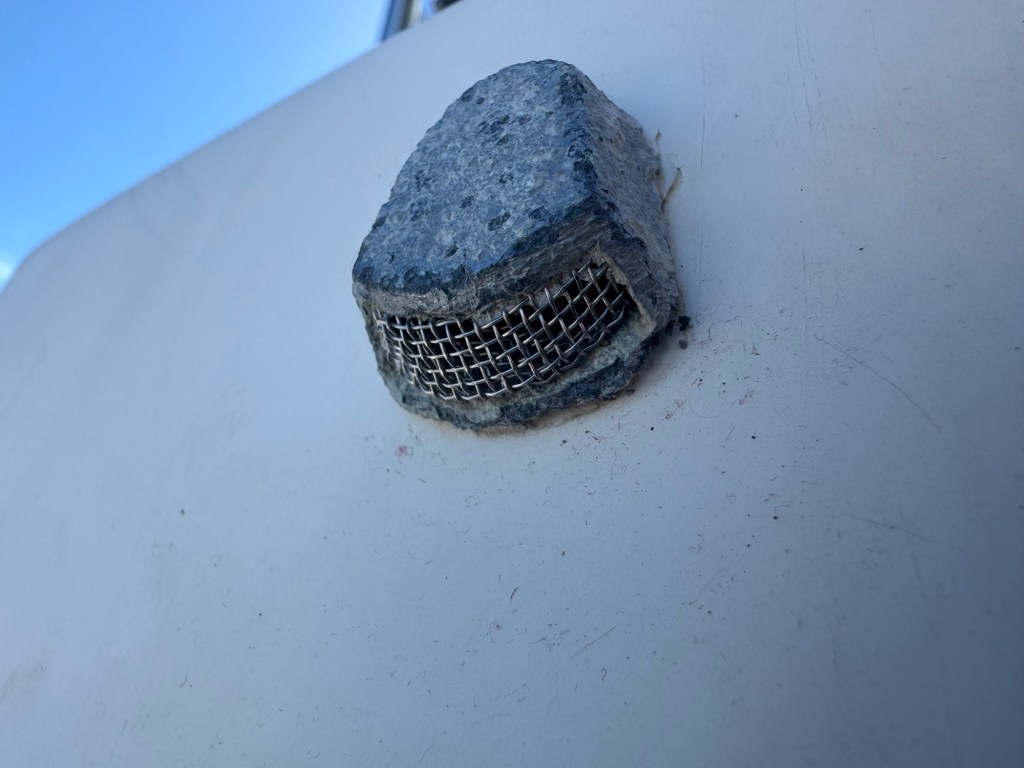
As to the rev hunting, which was intermittent in the shop, it is often due to a fuel or throttle issue. The lines and filter were new. There was no evidence of fuel or air leaks. The fuel was clean. The throttle was adjusted. They determined that the external vent for the fuel tank was corroding and dust, presumably aluminum, from such was intermittently or partially clogging the distal part of the vent line. Once the dust was blown out of and through the vent to the outside of the boat, the rev hunting issue disappeared. The vent opening thingy will be replaced.
Also, the team tested the exhaust with the old engine, that had been cleaned enough to function, and proved the rev hunting did not lead to back flow of water from the exhaust into the engine as I had suspected and had my contention from the outset.
I’ve learned a lot during this most unexpected journey. The team at Helmut’s Marine have met me at the vessel on multiple occasions to review findings and develop strategies. I now have a better understand exhaust systems, mufflers, muffler size requirements, risers, anti-siphon loops and valves, fuel systems, engine systems, and more.
My good friend, sailor and podcaster Michael Herz, provided insightful comments. He connected me with his good friend Nigel Calder, a renown expert on marine diesel engines, electrical systems, and many other aspects of boats and sailing, who taught me a few things and provided valuable insight as well.
Here are a few links to Mr. Calder’s books and classes……
Here is a link to a most excellent blog that Michael and his wife Kate have established regarding many aspects of the SF Bay focused on conservation …
Michael contributed an article to this blog a few years ago. You can read it here…..